Concept
Fawri Wallet
A mobile-wallet concept, from opening an account to everyday transactions.
Payments
Mobile wallet
Role
UX/UI · Design system
Context
B3G Technologies
Platform
Mobile
Fawri Wallet is a mobile-wallet concept designed for B3G Technologies demonstrations. The project brings visual identity, account journeys and a component library into one experience: transfer, pay and manage money.
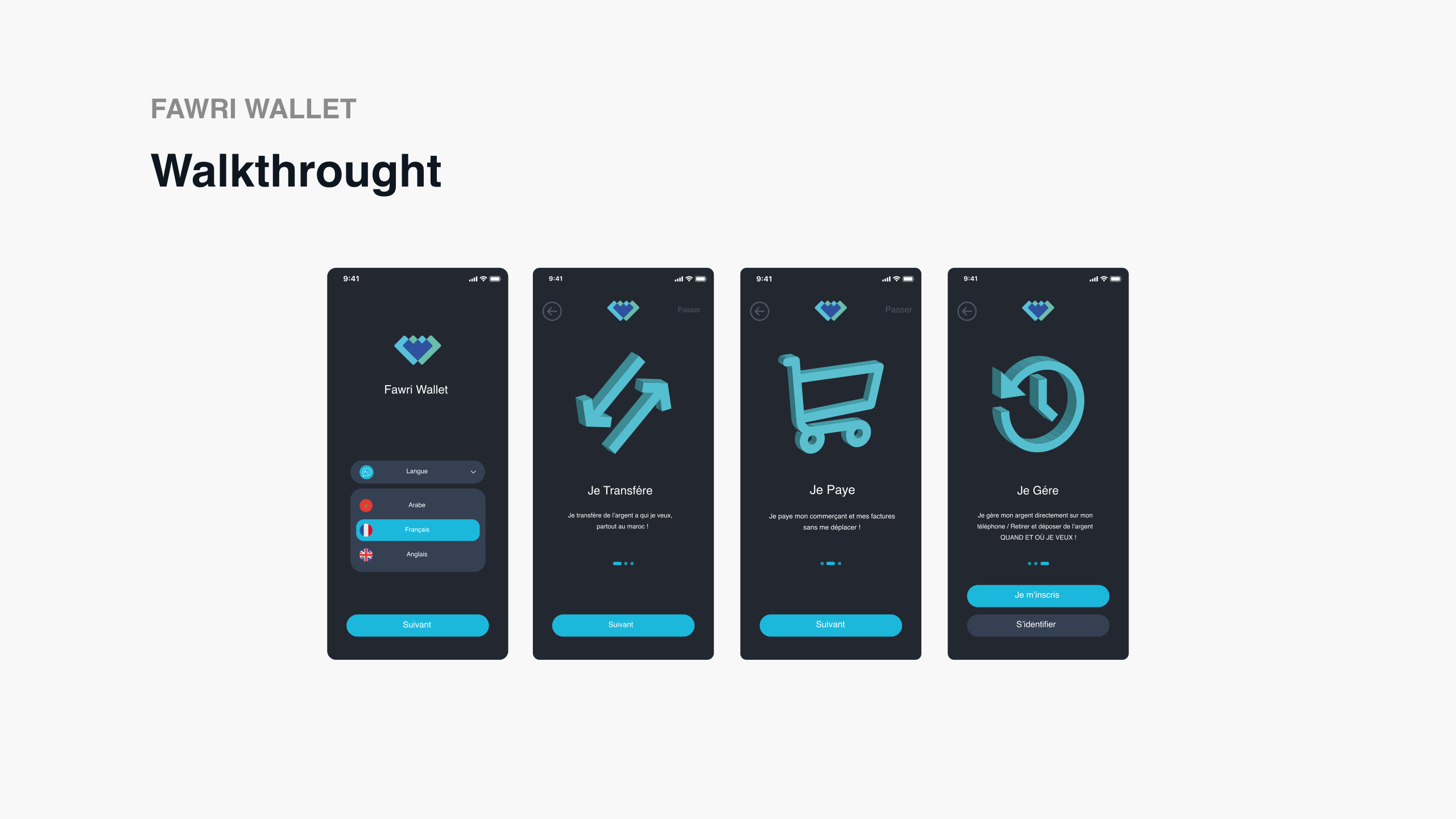
Introduce the service before asking for details
Fawri starts with language selection and an introduction to its uses. The journey explains what the wallet offers before opening registration or sign-in. A dark identity, cyan accents and iconography give these screens a shared visual language.
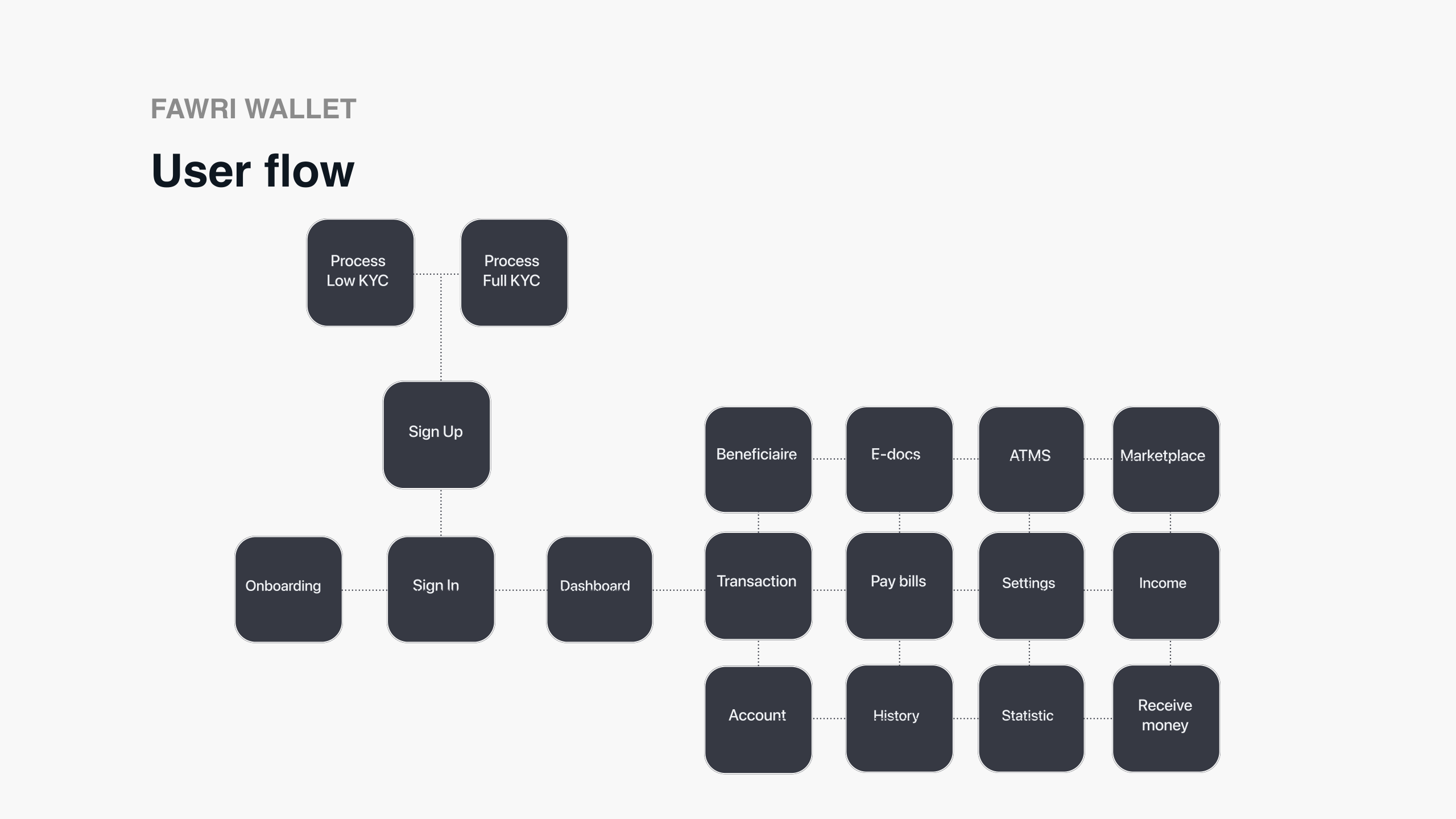
Connect everyday operations to a shared starting point
The concept map connects onboarding to the dashboard, then to recipients, transactions, bills and documents. It also distinguishes the two account-verification levels. This overview makes the relationships between services visible before looking at individual screens.
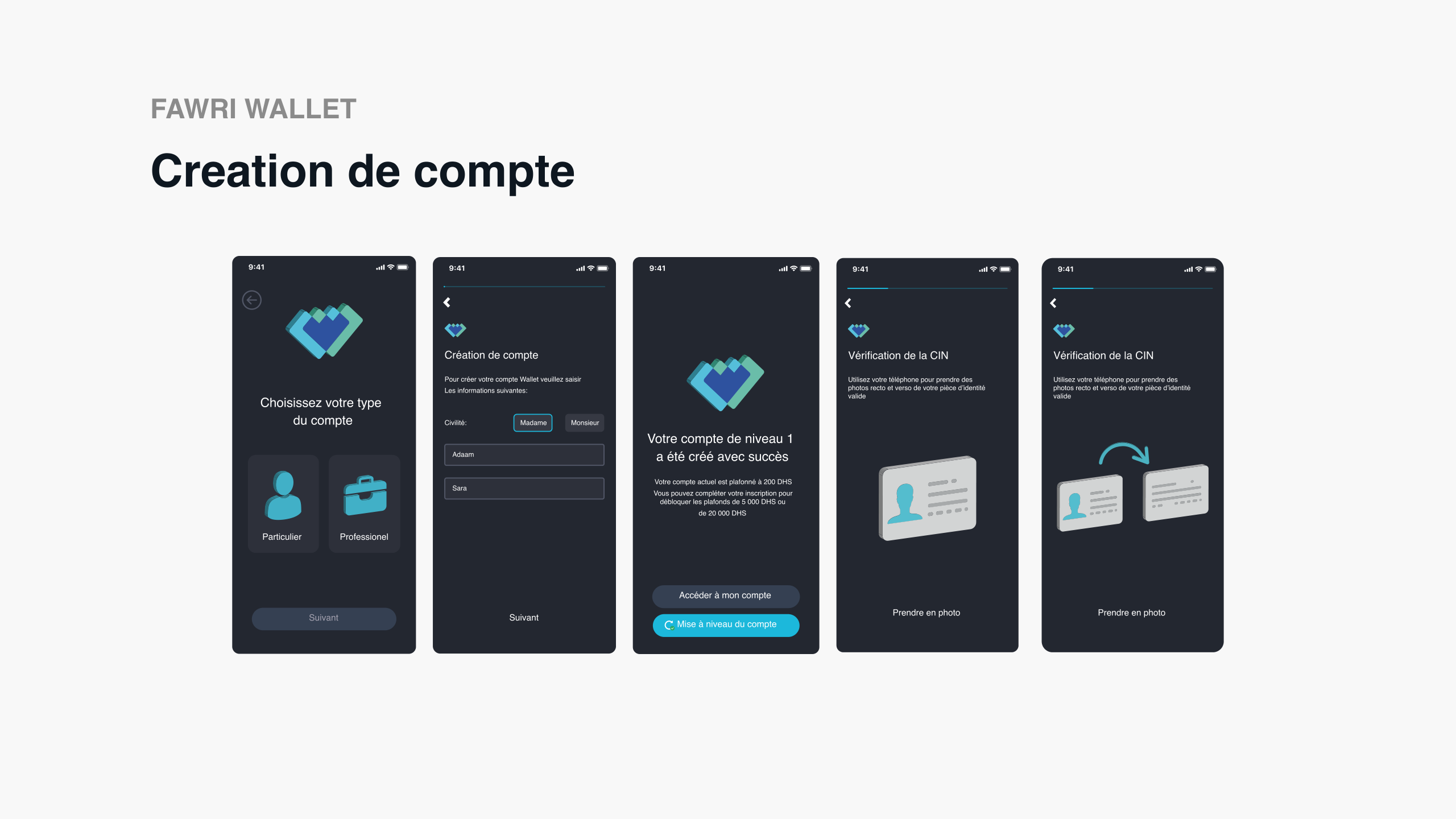
Create an account, then open verification
The mockups distinguish an initial account level from an upgrade. Personal or professional account selection and initial details come before identity verification. Account confirmation then offers a choice between entering the service and continuing the upgrade.
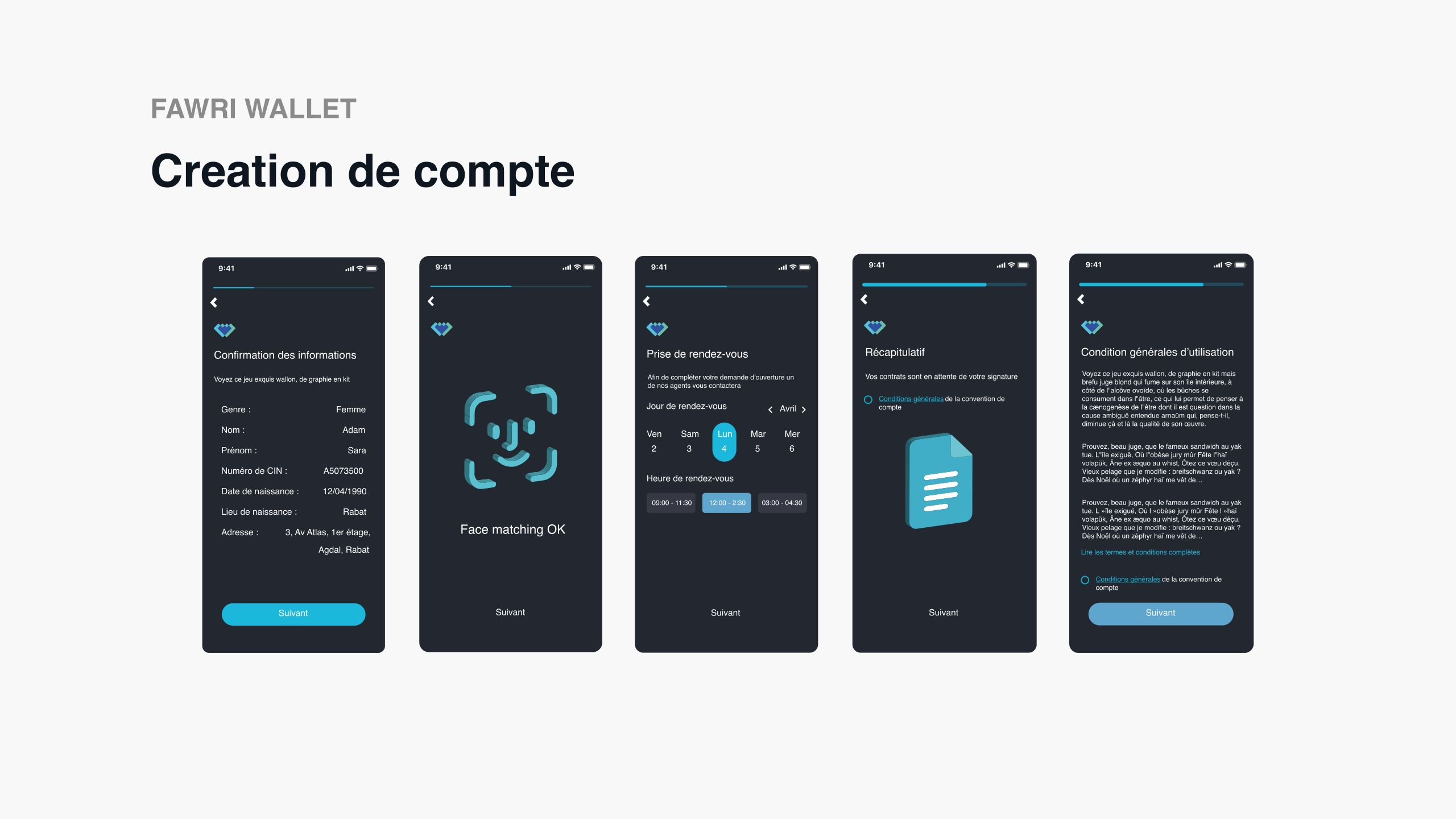
Make progression visible
The next part separates document photography, information confirmation, facial verification, appointments and contractual steps. Each screen has a primary action and a progress indicator. Together, they structure a process longer than a simple sign-in.
A home screen that does not show everything at once
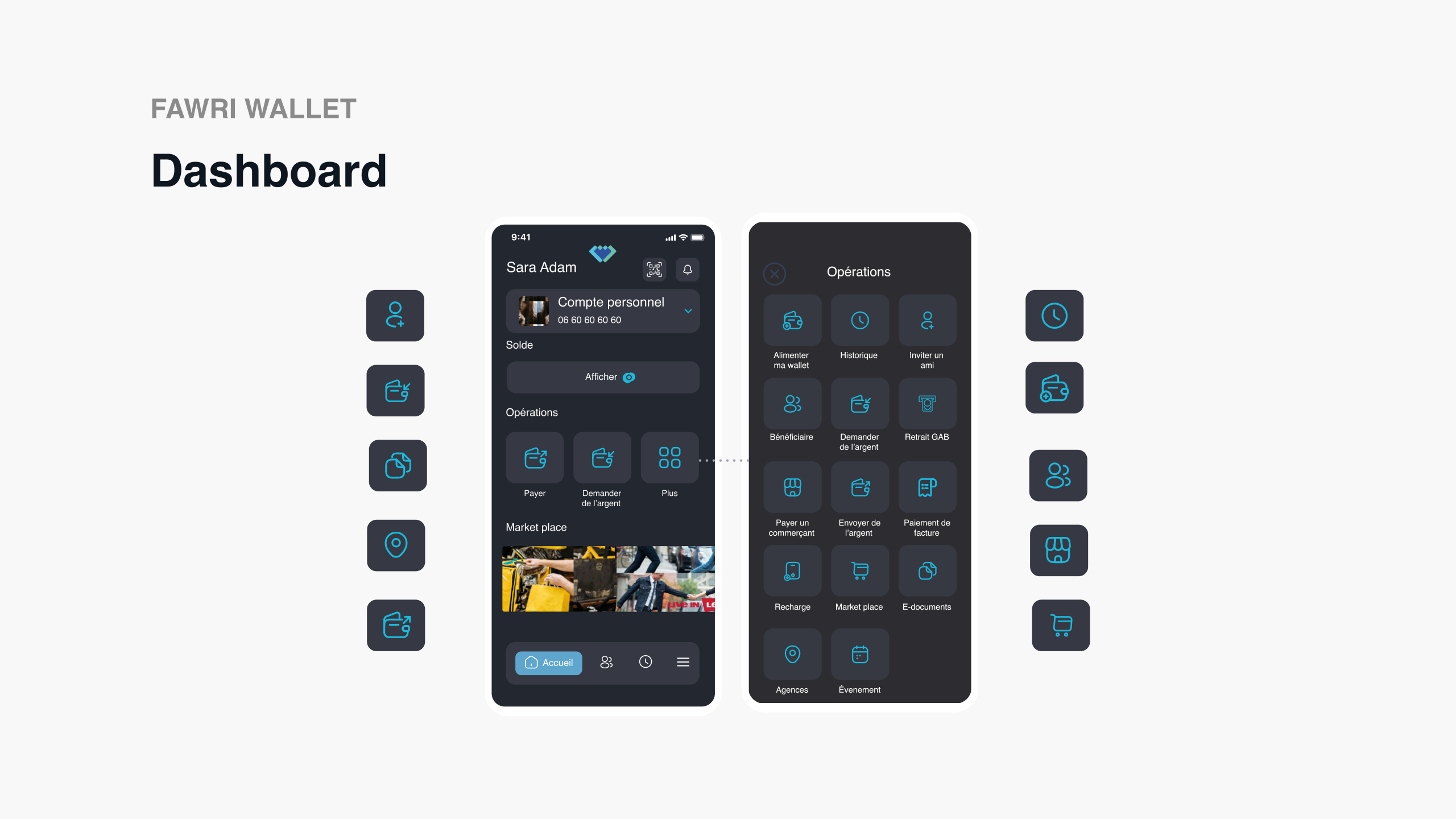
The dashboard puts the account and frequent operations first. Pay and request money are directly accessible; More opens additional functions. This structure distinguishes primary actions from a wider service catalogue.
Give screens a shared foundation
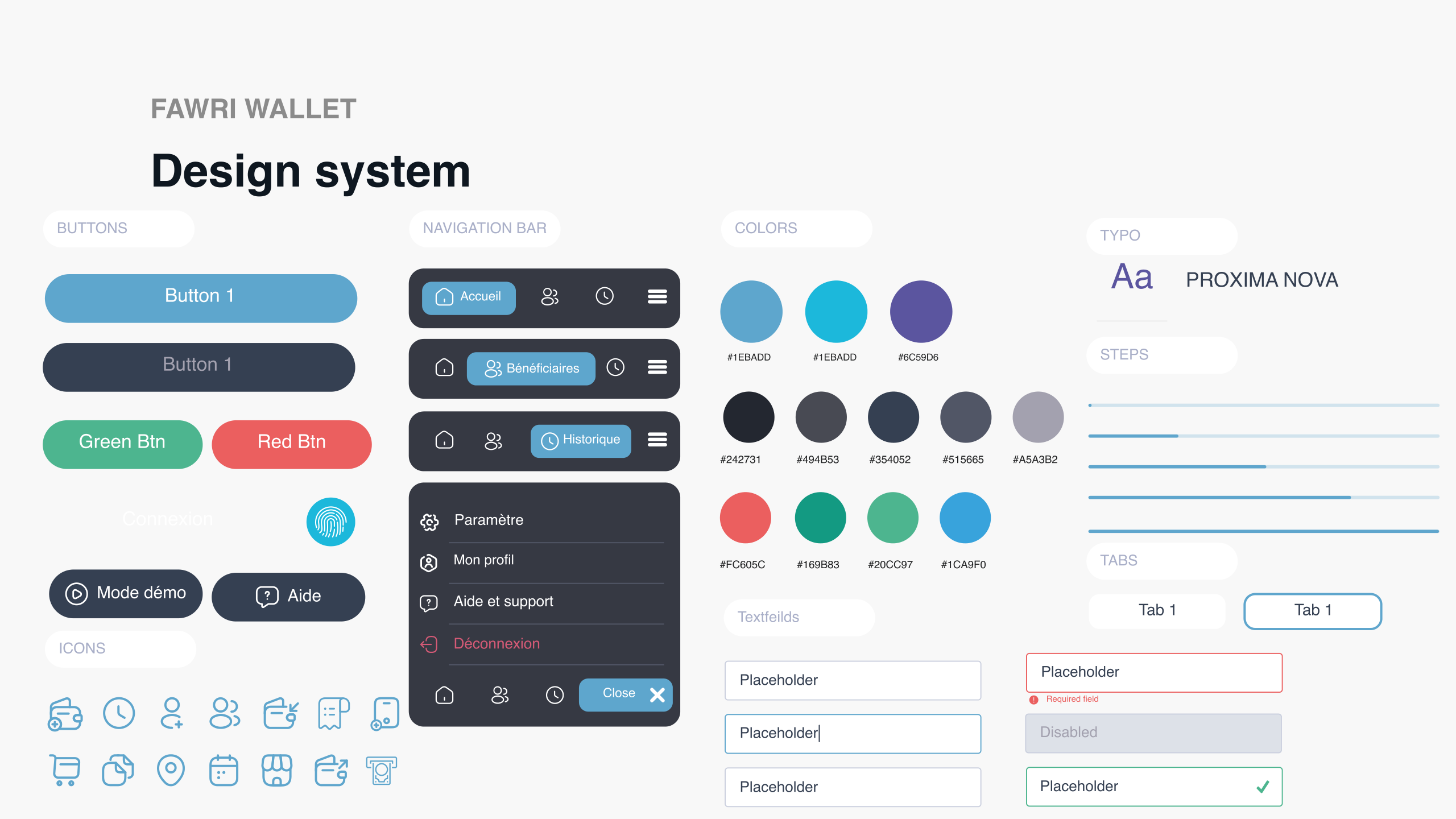
The interface system brings together buttons, navigation, colours, typography, icons and field states. Recurring components and visual rules connect the journeys. The work can be read at two scales: the service experience and the elements used to compose it.
You